
I turned on CNBC one afternoon to have something playing in the background while I worked on a client’s financial plan.
Over the next few hours, I listened to discussions about Apple’s recent price drop, anticipation surrounding its upcoming earnings report, concerns that AI stocks had become overvalued, and other market-moving headlines. The conversations centered on where investors should enter or exit positions, key price levels to watch, sectors to favor or avoid, and whether recent developments created new buying or selling opportunities. The next show shifted to Jim Cramer’s views on individual companies, his buy, sell, and hold recommendations, and his signature Lightning Round, where viewers called in for rapid-fire opinions on individual stocks.
None of that surprised me. That’s exactly what financial news is designed to cover.
But then I noticed something I had never really stopped to appreciate before.
The names of the shows perfectly matched the programming.

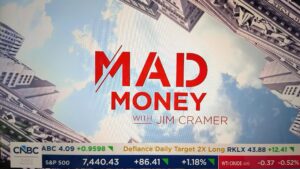
FAST Money. MAD Money.
The titles weren’t clever marketing. They were honest descriptions of the programming.
Financial media is built around speed, market movement, and what deserves your attention today. There’s nothing inherently wrong with that. In fact, many of these programs are informative and feature incredibly knowledgeable guests.
But seeing those titles together led me to a simple question:
Where’s Long-Term Money?
Not because financial news is missing something—but because long-term financial planning answers a completely different question.
I’d heard of these shows for years. But when I stepped back and looked at the entire lineup, one thing became remarkably clear: nearly every program was centered on today’s markets and what investors should do next.
- Squawk Box
- Worldwide Exchange
- Squawk on the Street
- Money Movers
- The Exchange
- Power Lunch
- Closing Bell
- Fast Money
- Mad Money
Every program has its own style and personality.
But almost every one is built around the same question:
What’s happening today?
Today’s market.
Today’s headlines.
Today’s earnings.
Today’s trades.
Today’s opportunities.
There’s nothing wrong with that. Staying informed matters.
The distinction is that financial news and financial planning answer two entirely different questions.
Financial news asks:
“What should I pay attention to today?”
Financial planning asks:
“What decisions will matter ten, twenty, or thirty years from now?”
The challenge today isn’t access to financial information. It’s knowing which financial decisions deserve your attention.
Financial News Informs. Financial Planning Guides.
Financial news explains what happened. Financial planning helps you decide what to do next. Those are two very different jobs.
Markets move every day. Meanwhile, a well-built financial plan helps you make sound decisions whether the market is soaring, falling, or going nowhere.
That’s why someone can watch financial news every day and still lack a clear financial strategy.
Likewise, someone who rarely watches the markets can build wealth by consistently making thoughtful financial decisions.
The Financial Decisions That Rarely Make Headlines
No television network interrupts programming because someone:
-
- Increased their savings rate.
-
- Optimized a Roth conversion.
-
- Updated their estate plan.
-
- Reviewed their insurance coverage.
-
- Built a tax-efficient retirement income strategy.
-
- Rebalanced their portfolio.
-
- Reduced unnecessary investment costs.
-
- Coordinated all of those decisions into one financial plan.
None of those moments make exciting television.
Yet those decisions often determine whether a family reaches financial independence.
Today’s market headlines may be forgotten next month.
Good planning can shape your financial life for decades.
If you’d like to understand why planning matters more than collecting information, read Why More Financial Information Can Lead to Worse Decisions.
Investing Is Only One Part of Financial Planning
One of the biggest misconceptions I see is the belief that investing is financial planning.
It isn’t.
Investing is one important piece of a much larger picture.
Investments affect taxes. Taxes influence retirement income. Cash flow determines how much you can save, while insurance protects everything you’ve built. Finally, an estate plan helps ensure your wishes are carried out. None of these decisions exists in isolation.
Each decision matters. More importantly, every decision affects the others. That’s where comprehensive financial planning creates real value.
Rather than making each financial decision in isolation, financial planning brings everything together into one coordinated strategy.
If you’ve never thought about your finances this way, start with How Strong Is YOUR Plan? Here Are the Financial Plan Essentials.
The Biggest Financial Mistakes Usually Aren’t Investment Mistakes
When people picture costly financial mistakes, they often think about buying the wrong stock or selling during a market decline.
Those mistakes happen. However, many of the most expensive financial mistakes have little to do with investment selection. Instead, they occur when otherwise good financial decisions aren’t connected.
A large retirement account doesn’t automatically produce sustainable retirement income.
An outdated beneficiary designation can override an estate plan.
A tax strategy that made sense ten years ago may no longer be the right one today.
Even a high-income family can feel financially uncertain if every major decision is made independently.
In other words, the problem usually isn’t making one bad decision.
It’s making several good decisions that never work together.
That idea is explored further in You Don’t Need Better Stocks—You Need Better Decisions.
Markets Matter. Coordination Matters More.
Financial news serves an important purpose.
It keeps investors informed about markets, companies, interest rates, and economic events.
Financial planning asks better questions.
-
- Am I saving enough?
-
- How much is enough?
-
- Am I paying more in taxes than necessary?
-
- Is my retirement plan sustainable?
-
- Am I taking risks I don’t recognize?
-
- Are all of my financial decisions supporting the same long-term goals?
Those questions rarely create breaking news.
Instead, they create financial confidence.
If daily market headlines often leave you wondering whether you should change your investment strategy, you may also enjoy Is the Market Up or Down? Yes. That’s the Point.
The Bottom Line
Watching financial news can help you stay informed. Financial planning helps you become prepared. One explains today’s markets. The other helps prepare you for the next thirty years.
There’s value in knowing what happened today. There’s even more value in knowing what to do next.
The challenge isn’t finding more financial information. It’s turning that information into better financial decisions.
That’s where financial planning creates its greatest value. It coordinates your investments, taxes, retirement, insurance, estate plan, and cash flow so every decision supports the life you’re trying to build.
Lasting wealth isn’t built by reacting to headlines. It’s built by making thousands of thoughtful decisions—and making sure they all work together.
That’s the financial advice you won’t find on CNBC.
Continue Learning
If this article resonated with you, these resources expand on the same ideas.
Internal Articles
External Resources
CFP Board – What Is Financial Planning?
Learn what comprehensive financial planning includes and why CFP® professionals follow a fiduciary standard.
Investor.gov – Investing Basics
Educational resources from the U.S. Securities and Exchange Commission covering diversification, risk, and long-term investing.
IRS – Retirement Plans and IRAs
Official guidance on retirement accounts, contribution limits, Roth IRAs, required minimum distributions, and other tax-related retirement topics.
One of the internet’s best free resources on evidence-based, low-cost, long-term investing.